The radiators are hot, the bills are high, but your hands are still frozen around your mug of tea. The room looks warm on paper, but your body isn’t buying it.
On a winter evening, I visited a couple on a quiet suburban street. Same outside temperature, same city, same gas company. Their neighbor’s house felt cozy the second you walked in. Theirs felt like a church at dawn: echoey, chilly, slightly hostile. Both had recently upgraded their boilers. Both swore they kept the thermostat at 20°C. Only one home truly felt warm.
That’s the strange thing about heat at home. Numbers lie. Feelings don’t.
Why your home feels cold when the heating says otherwise
Step into certain homes and the first thing you notice is the temperature on your skin, not on the wall. The air can be technically warm, but your body senses drafts, cold surfaces, and tiny movements of air that steal heat from you. You stand near a big window and feel an invisible chill draining the warmth from your legs.
Our bodies are not thermometers-they’re storytellers. They react to contrast: a hot radiator next to an icy wall, a warm living room opening onto a cold hallway, a wood floor above a freezing cellar. Your brain reads all that as “not quite safe yet,” so you keep your sweater on and hunch your shoulders.
That’s why some homes, at the exact same temperature, feel wildly different.
In a 1930s terraced house in Leeds, I met Hannah, who was convinced her boiler was faulty. Her smart thermostat said 20.5°C in the living room, yet she sat there wrapped in a blanket. “My mom’s house at 19°C feels warmer than this at 21,” she told me, half joking, half desperate.
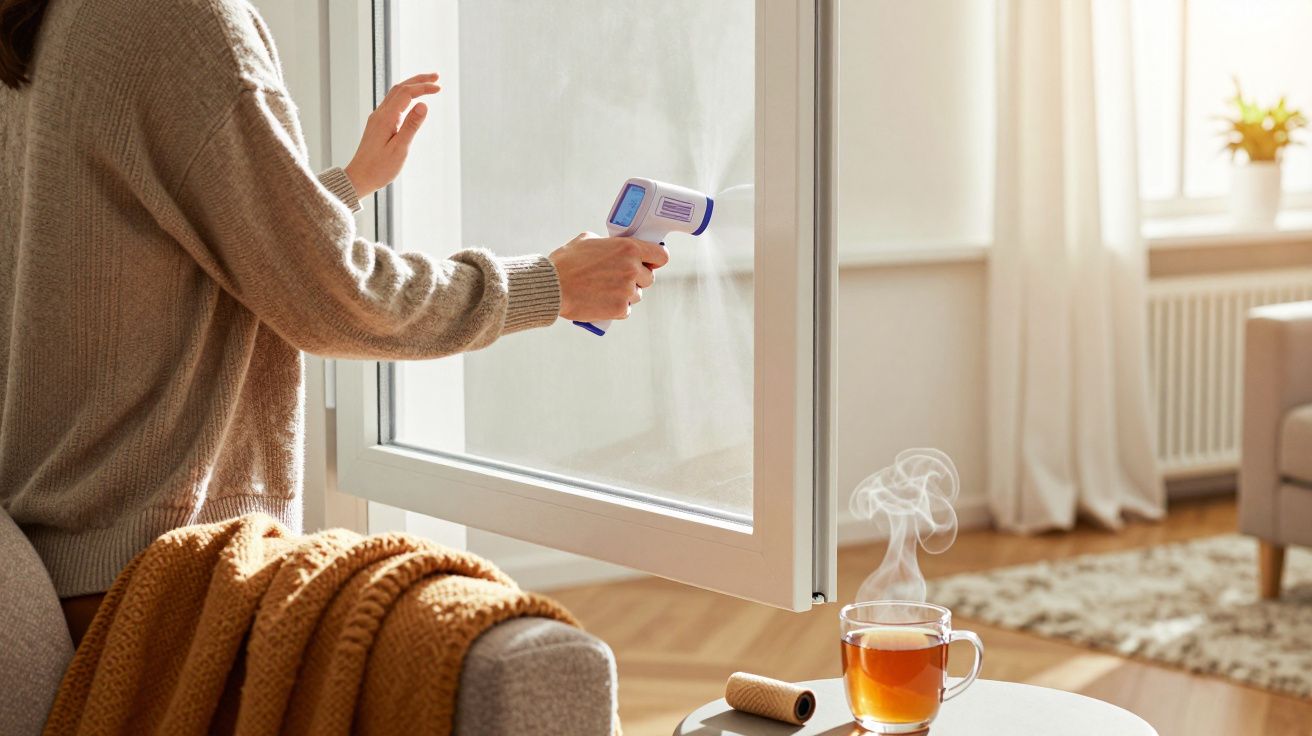
We walked around. The radiators were working. The boiler was modern. But the front room had a large single-pane bay window and an uninsulated suspended floor. When we measured the surface temperature of the window, it read just above 10°C. The floor near the baseboard was barely 13°C. The air was trying its best. The surfaces were sabotaging it.
That mismatch is common. A study from the UK Building Research Establishment has shown that poorly insulated homes can feel 2–3°C colder than the thermostat reading, purely because of cold surfaces and drafts. People often respond by cranking up the heat, not realizing the real battle is happening on walls, floors, and windows.
Here’s the quiet physics behind that uncomfortable feeling. Your body loses heat in three main ways at home: through the air around you, through surfaces that “steal” warmth by radiation, and through moving air that brushes against your skin. You notice the thermostat, but your nervous system notices the rest.
If your walls and windows are much colder than the air, your body radiates heat toward them, like a person standing near a block of ice. That’s why you can feel chilled sitting by a window even when the room temperature is technically comfortable. Add a slight draft sneaking under the door or through a mail slot, and your skin suddenly feels under attack.
The result? You label the whole home as “cold,” even if the heating system is doing exactly what it was designed to do. The problem isn’t the boiler alone. It’s the way the house holds, moves, and shares heat.
Small moves that make a home feel instantly warmer
One of the fastest ways to change how warm a room feels has nothing to do with your boiler settings. It’s about what you put between you and the cold: thick, heavy curtains on leaky windows; a rug over a bare wood floor above an unheated space; a simple draft blocker along the bottom of a door that opens to a chilly hallway.
These aren’t glamorous upgrades. You won’t brag about a rolled-up towel at the foot of your front door. Yet they transform the “radiant temperature” your body senses. A cold pane of glass covered by a curtain stops acting like a giant ice sheet in the room. A rug interrupts the cold rising from a void below your floorboards. The heating system hasn’t changed. Your comfort has.
Many people instinctively go straight for the thermostat when they feel cold. They read 20°C, feel no difference, and twist it to 22, then 23, slightly annoyed. The gas meter spins faster, but the home doesn’t turn into the cozy cocoon they imagined.
On a rainy Tuesday, one homeowner in Bristol told me she had stopped inviting friends in winter because she was embarrassed by how cold her place felt. She’d already “done everything”: new boiler, serviced radiators, even a smart thermostat with an app. Yet the living room still felt like a waiting room. The culprit was a wide, open staircase and a permanently open attic hatch, turning her house into a chimney.
Closing that hatch, adding a simple insulated cover, and zoning the heating so upstairs didn’t run as hot as downstairs made more difference to her comfort than years of tweaking the thermostat. The bill went down. Her shoulders finally relaxed.
The honest truth? Most of us treat heating like the volume control on a TV. If we don’t like what we feel, we just turn it up and hope it gets better. The system is more subtle than that.
There’s also the emotional side. Cold homes come with guilt and frustration: feeling wasteful when the bills spike, yet still shivering. Parents worrying about kids sleeping in chilly bedrooms. Renters stuck with drafty windows they’re not allowed to replace. That mix of powerlessness and discomfort can make every cold patch in the house feel like a personal failure.
Let’s be honest: nobody really does this every day. Nobody sits down to map airflows and surface temperatures like a building physicist. People do what they can between work, kids, and late-night scrolling. So the small, forgiving fixes matter most: moving the couch away from an exterior wall, using draft stoppers, bleeding radiators once or twice a season, finding the one window that leaks more than all the others.
“The goal isn’t a perfect house,” says one energy adviser I spoke to. “It’s a home where your body finally stops bracing itself.”
Here are a few quick comfort levers that quietly change everything:
- Thick curtains on the coldest windows
- Rugs in rooms above unheated spaces
- Draft blockers on leaky doors
- Furniture pulled slightly away from icy exterior walls
- Closing off unused, unheated rooms at night
They won’t earn you likes on social media. They will make your next cup of tea on the couch feel like it belongs there.
Rethinking what a “warm home” really means
We’re used to thinking of warmth as a number: 19, 20, 21°C. The story is tidier that way. Yet the homes that feel truly comfortable are rarely the ones with the highest settings. They’re the ones where the air, the surfaces, and the flows of heat all work together-quietly, invisibly.
On a cold night, walk through your place and pay attention to your body instead of the thermostat. Where does your skin tense up? Where do your feet hesitate to touch the floor? Which corner makes you instinctively reach for a blanket? Those sensations are data. They tell you where heat is escaping, where cold is biting back.
On a street where houses look identical from the outside, one can feel like a refuge and the next like a fridge. The difference lies in details rarely shown in real estate photos: a well-fitted attic hatch, a heavy curtain over a glass door, a hallway not used as a wind tunnel. We’ve all lived that moment where you step into someone else’s home in winter and feel your whole body drop its guard in the first five seconds.
That feeling isn’t luxury. It’s design, care, and a bit of physics on your side.
| Key point | Detail | Why it matters to you |
|---|---|---|
| Air vs. surfaces | The air can be warm while walls, windows, and floors stay cold | Understand why 21°C can still feel freezing |
| Micro-drafts | Small leaks create a disproportionate feeling of cold | Identify the spots to address first at low cost |
| Small, targeted actions | Heavy curtains, rugs, draft stoppers, repositioning furniture | Get more comfort without replacing your entire heating system |
FAQ
- Why does my house feel colder than my friend’s at the same temperature? Your body doesn’t only sense air temperature. If their walls, floors, and windows are warmer and less drafty, their 19°C will feel cozier than your “sharp” 21°C surrounded by cold surfaces.
- Is my boiler too small if I still feel cold? Not necessarily. Many comfort issues come from insulation gaps, drafts, and room layout. A heat-loss assessment often reveals that the boiler is fine, but the building envelope is leaking.
- Do rugs really make a difference to warmth? Yes, especially above unheated spaces or bare concrete. They cut radiant heat loss from your body to the floor and stop cold from “spilling” into the room through gaps.
- Should I heat unused rooms to feel warmer elsewhere? They don’t need to be toasty, but ice-cold rooms next to warm ones create big temperature contrasts and drafts. Low background heat and closed doors often work best.
- Is it worth spending on thick curtains instead of turning up the heating? For many homes, yes. Heavy, well-fitted curtains over the worst windows can dramatically improve comfort and reduce heat loss, saving money over time.




Comments
No comments yet. Be the first to comment!
Leave a Comment