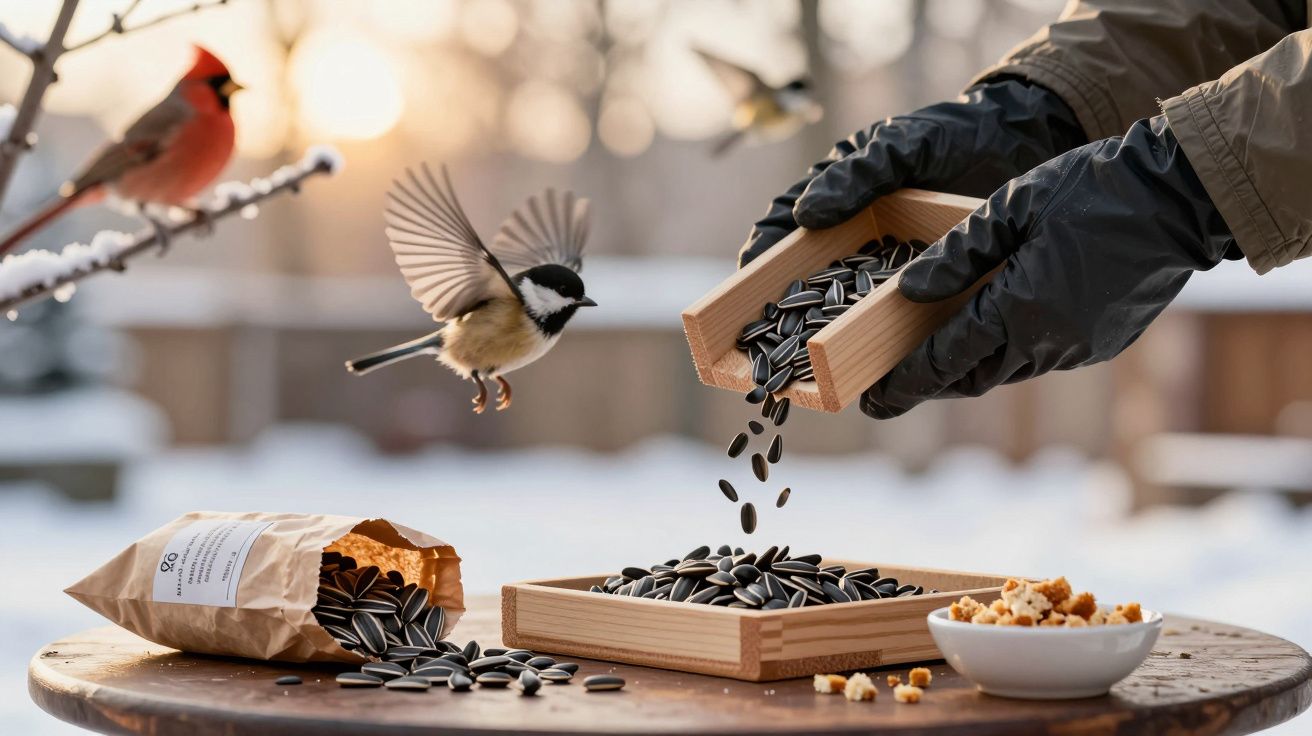
Most people want to help. Most people get it wrong.
Every winter, well-meaning households scatter scraps for hungry birds and feel they’ve done their part. Yet a quiet nutritional crisis unfolds on window ledges and lawns, fueled by habits that feel generous but drain wild birds of the very energy they need to survive the night.
Why our crumbs of kindness often do more harm than good
The classic scene is familiar in both Europe and North America: a stale heel of bread tossed on the lawn, a swirl of sparrows descending, and a faint glow of satisfaction at “feeding nature.” That glow rarely matches the reality.
Bread, especially soft white bread, acts like a fake feast. It swells in a bird’s crop and stomach, bringing on a quick feeling of fullness. Yet it holds very little of what a small bird burns through on a freezing night: fat, quality protein, and key micronutrients.
Bread can leave a bird stuffed but starving, with a full stomach and an empty fuel tank when temperatures plunge.
The risks go further than poor nutrition. Most baked goods contain salt and leavening agents. Small songbirds have a fast metabolism but a delicate fluid balance. Too much salt stresses their kidneys, speeds dehydration, and, in extreme cases, can be fatal.
Then there is the simple fact that bread rarely stays fresh for long outside. Moist slices lying on damp ground quickly become a petri dish. Bacteria and molds thrive on them, opening the door to outbreaks of salmonellosis and other infections that can sweep through local bird populations.
The overlooked winter lifesaver: a small black seed
Wild birds in January fight a brutal daily equation. Insects have vanished, the soil is frozen, daylight is short, and every gram of body fat can mean the difference between waking up and freezing in the dark. To help, they don’t need treats that resemble our food. They need concentrated energy in a form their bodies evolved to handle.
The single most effective option for backyard feeders is rarely the first thing people buy: black oil sunflower seed.
Often buried among cheaper filler grains in mixed seed bags, these small, plain-looking seeds carry a remarkably dense payload of fat. Unlike wheat or cracked corn that many songbirds flick aside, black sunflower seeds are usually eaten completely-shell and all or kernel alone, depending on the species.
Black oil sunflower is not a luxury snack. For many birds, it functions as a compact survival ration engineered by nature.
The very high lipid content gives birds an immediate source of calories they can turn into body heat. In freezing conditions, a blue tit, chickadee, or goldfinch may burn through a third of its body weight in energy over a single winter night. Oil-rich seeds provide the metabolic “firewood” they need far better than low-fat grains.
Why shell structure matters as much as nutrition
Energy density tells only half the story. The physical design of the seed also shapes its value. Open any feeder on a cold morning and you can see the trade-off at work: every second spent wrestling with a tough shell is a second a small bird burns fuel without replacing it.
Black oil sunflower seeds have a relatively thin husk. That detail looks trivial from a human perspective. For a bird that weighs less than a letter in the mail, it changes the math of survival.
Finches, tits, and other small-billed species can crack these shells with minimal effort. The energy they gain from the oily kernel far outweighs what they use to open it. Harder seeds, by contrast, force them into a losing bargain: plenty of work, modest payoff.
A good winter seed offers a positive energy balance: more calories gained from the kernel than spent on opening the shell.
Striped vs. black: the simple check most shoppers skip
On garden center shelves, sunflower seed comes in two main types, and confusion is common. The difference matters for wild birds:
- Striped sunflower (black-and-white shell): Common in snacks for people and pet parrots. Thick, hard husk. Lower oil content. Better for large, powerful beaks than small songbirds.
- Black oil sunflower (solid black): Thinner shell, easy to crack. Very high fat content. Bred for oil production in farming and perfectly suited to winter feeding needs.
From the perspective of a coal tit or house finch, the choice is straightforward: the solid black seeds are far more accessible and far more rewarding. They extend feeding opportunities to species with finer bills that would ignore or struggle with the striped version.
Turning a backyard into a genuine winter refuge
Switching from bread crusts and “economy” seed mixes to black oil sunflower does more than keep a few birds alive. It reshapes the entire dynamic of a yard or balcony feeder.
Higher-quality food attracts greater species diversity. Tits, chickadees, nuthatches, finches, woodpeckers, and even some sparrows often prioritize stations stocked with oily seeds. That, in turn, supports healthier breeding populations once spring arrives, when these same birds help control aphids, caterpillars, and other plant pests.
Feeder design also plays a role. Open trays look charming but expose seed to rain, snow, and droppings. Moist, contaminated food quickly spoils. Instead, wildlife groups recommend simple tube feeders or hanging silos that keep seed dry and out of reach of prowling cats.
Raising the feeding station and keeping seed off the ground can reduce disease risk, predation, and rodent problems in one move.
Because birds relish black oil sunflower, spillage tends to drop sharply. That helps keep patios cleaner and makes the feeding area less attractive to rats and mice-an issue in both city courtyards and suburban yards.
What to put out-and what to skip-during a cold snap
For anyone trying to adjust their winter routine, the basic shopping list is refreshingly short. Here is a quick guide for the coldest weeks:
| Food | Winter value for birds | Notes |
|---|---|---|
| Black oil sunflower seed | Excellent energy source | Best all-around seed for small songbirds; use in tube or silo feeders. |
| Striped sunflower seed | Moderate | Better for bigger beaks; less efficient for small species. |
| Cheap mixed seed (high in wheat, corn) | Poor | Many birds discard fillers, leaving waste and attracting pigeons or rodents. |
| Bread, crackers, pastries | Misleading | Low nutrients, high salt; can contribute to disease and malnutrition. |
Beyond seed: habits that amplify your impact
Food choice is central, but small behavior changes increase its effect. Regular cleaning of feeders with hot water helps slow the spread of disease. Rotating the position of feeders reduces the buildup of droppings beneath them. Removing old, damp seed cuts the risk of mold poisoning.
Timing also shapes outcomes. Consistent feeding through a cold spell lets birds “budget” their energy. When a reliable source of high-fat food exists, they carry slightly more body fat into the night, raising their odds of making it to dawn. Sudden stops after weeks of heavy support can be stressful, especially in urban areas where natural forage is scarcer.
Why this tiny change matters in a warming world
As weather patterns shift, winter no longer follows its old script. In many temperate regions, mild spells interrupt harsher cold snaps. That unpredictability can disrupt insect cycles and seed availability, leaving gaps in the natural pantry that birds struggle to bridge.
A network of yards equipped with energy-rich feeders functions like a chain of micro-refuges. Individually, a single silo of black seeds may look trivial. Collectively-across a neighborhood, town, or suburb-those feeders cushion wild populations against erratic seasons and habitat loss.
For anyone who already delights in watching robins, chickadees, or goldfinches outside the kitchen window, the switch from bread to black oil sunflower is a surprisingly powerful act. It aligns good intentions with good science, replacing empty comfort food with a genuine lifeline when the frost bites hardest.


Comments
No comments yet. Be the first to comment!
Leave a Comment