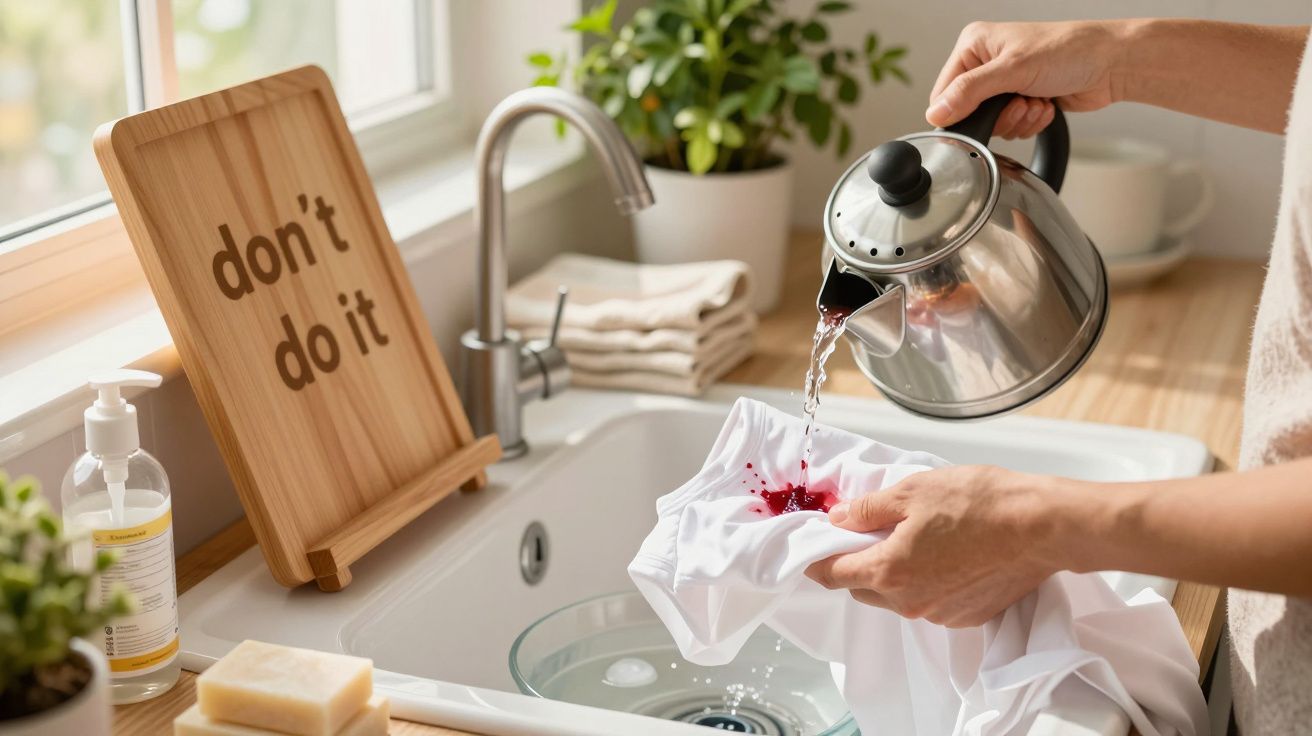
You groan, drop everything, and run to the sink. The reflex is automatic: crank the handle all the way to hot, steam rising, and scrub like crazy. It feels proactive-almost heroic-like you’re saving the fabric in real time.
Five minutes later, the stain looks… darker. The fibers feel rougher. You toss the shirt in the washer on a hot cycle “to finish the job” and hope for a miracle. When you pull it out, the brown ring is lighter, yes-but still there, like it’s been tattooed in.
That’s the paradox: the more heat and effort you put in, the more the stain digs in. And hot water is often the worst accomplice of all.
Why hot water can turn a simple stain into a permanent mark
On a kitchen counter, hot water feels like the solution to everything. On fabric, it can be a quiet saboteur. When you hit many fresh stains with very hot water, you’re basically “cooking” them into the fibers. Like cooking an egg, what was soft and soluble turns firm and stubborn.
On a cotton T-shirt, those fibers swell a bit with heat. Pigments and proteins slip in deeper. Once the water cools, the fabric tightens again… around the stain. From the outside, it just looks like the mark got sharper. Inside the fabric, you’ve just closed the door on easy cleaning.
We don’t see that process happening, so we trust the feeling. Hot water gives a sense of “power wash.” But laundry science is less about brute force and more about timing and chemistry. And for many stains, the hotter the water, the worse the outcome.
On a busy weekday morning, a London dry cleaner told me he can guess, almost instantly, which stains have been “mistreated at home.” Coffee halos, yellowed sweat circles, old blood patches-they often carry the telltale signs of hot water: edges slightly darker, center faded, overall texture a bit stiff.
He pointed at a neat stack of shirts. A white office shirt with a latte spill, already washed twice at 140°F (60°C), now had a beige shadow across the stomach. “If she had rinsed this cold and dabbed, I’d probably get this 90% out,” he sighed. “Now, maybe 40%.” The numbers weren’t scientific, but the frustration was real.
We’ve all lived that moment where a “small accident” becomes a long-term regret. A survey by an American consumer group once found that more than half of respondents thought hotter water was always better for stains. That belief travels fast on social media and between generations, even though it runs straight against what many professional cleaners actually do.
The logic behind the damage is pretty simple. Many everyday stains are made of proteins, fats, or pigments that react badly to heat. Blood, egg, milk, sweat-even a splash of gravy-contain proteins that coagulate when heated, like food in a pan. Once coagulated inside textile fibers, they’re much harder to dissolve.
Greasy stains also behave oddly. Warm water can help loosen some oils, but very hot water can redistribute the grease, spreading it into a larger, duller patch. Pigmented drinks like coffee, tea, and red wine contain tannins that behave a bit like fabric dye when heated. Give them enough heat at the wrong time and they almost “bond” with the fibers.
So the question isn’t “Is hot water good or bad?” It’s when, where, and for what kind of stain? Get those three wrong, and you lock in the very mark you were trying to erase.
The right moves: what to do instead of blasting everything with hot water
The best reaction to most fresh stains looks almost boring: act quickly, go gently, start cool. For protein-based stains-blood, egg, yogurt, milk, baby spit-up-cold water is your best ally in the first minutes. Rinse from the back of the fabric to push the stain out, not deeper in.
For coffee, tea, or red wine, start with cool to lukewarm water, not scalding. Dab, don’t scrub. Use a clean cloth or paper towel and press, lift, press again. Scrubbing just drives pigments further into the weave and roughens the surface. A drop of gentle liquid detergent or dish soap can help “catch” pigments and grease before they settle.
Only later, once the worst is out, should you think about warmer cycles in the machine. At that point the job is about hygiene and brightening, not fighting a fresh, intense stain.
With greasy stains-salad dressing, sunscreen, lipstick, cooking oil-think “break down the fat first.” Put a tiny amount of dish soap directly on the mark, rub it lightly between your fingers or with a soft brush, then rinse with lukewarm water. Lukewarm water works with the detergent to soften the grease without shocking the fabric.
For sweat and deodorant stains, skipping boiling hot cycles can actually prevent those yellow halos from getting worse. A pre-soak in cool water with a bit of baking soda or oxygen bleach can help lift buildup before the wash. Let’s be honest: nobody does this every day. But doing it just for your favorite shirts can extend their life by years.
When in doubt, a simple rule holds: if the stain comes from something you’d cook-egg, milk, meat, sauce-keep the first water cold. Let soap and time do the heavy lifting instead of heat.
People also trip over small, very human mistakes: scrubbing hard with hot water on delicate fabrics; throwing a stained item straight into a hot dryer, hoping it will “finish cleaning”; using random stain removers on silk or wool without testing first. All driven by the same impulse: fix it fast, move on.
There’s an emotional side too. A brand-new dress, a baby’s outfit, a gifted shirt-when something you love gets stained, you panic. That panic leads to extremes: boiling water, harsh chemicals, frantic scrubbing over the sink at midnight. And later, a mix of regret and resignation when the mark remains.
Being kinder to fabrics also means being kinder to yourself. You don’t need a perfect protocol posted on the laundry room wall. You just need a couple of reflexes: breathe, go cooler first, test before escalating. The stain is urgent, yes-but not worth sacrificing the whole garment out of stress.
“I tell customers: treat the stain like a conversation, not a fight,” explained a Paris-based presser. “If you arrive shouting with boiling water and strong chemicals, the fabric will ‘freeze up’ and shut down. Start soft, listen to how it reacts, then raise the stakes if needed.”
This “conversation” can turn into a few simple habits that fit into real life:
- Keep a small kit near the washing machine: gentle liquid detergent, dish soap, a soft toothbrush, baking soda, and an oxygen bleach, plus an old white towel for dabbing.
- Make a mental map of which stains hate heat: blood, egg, milk, yogurt, sweat, and most dairy-based sauces should always see cold water first.
- Before any hot rinse or hot cycle, ask one question: “Have I already lifted most of this out with cooler water?” If not, give it that chance.
Hot water isn’t the villain-just the wrong hero at the wrong time
There’s a quiet shift that happens once you stop reaching for hot water on autopilot. You start treating stains as small puzzles, not emergencies. Cold or lukewarm water becomes the opening move, not an afterthought. Hot water turns into a deliberate choice-reserved for the right chapter of the story, not the first line.
On paper, it sounds like one more thing to manage in already busy days. In reality, it often comes down to changing what you do in the first 60 seconds after a spill: a quick cold rinse in the bathroom sink; a dab of dish soap before you drop the T-shirt in the laundry basket; a decision to skip the hot cycle on that one shirt until you’ve tried something gentler.
And something else shifts too: your relationship with the clothes you own. A red wine spot on a linen tablecloth becomes a memory you can still invite friends to sit around, not a reason to hide it forever. A coffee splash on your work shirt turns into a five-minute detour, not a permanent badge of distraction. Hot water stays in your toolbox, but it no longer runs the show.
| Key point | Details | Why it matters to readers |
|---|---|---|
| Protein stains need cold first | Blood, egg, milk, yogurt, baby spit-up, and meat juices should be rinsed in cold water from the back of the fabric, then treated with a mild detergent before any warm cycle. | Stopping the “cooking” effect of heat on proteins can be the difference between a stain that disappears in one wash and a permanent shadow on a favorite item. |
| Hot water can set tannins and dyes | Coffee, tea, red wine, and some sauces contain tannins that behave like dye when exposed to high temperatures, especially on cotton and linen. | Knowing this helps you avoid turning a spill into a forever mark, particularly on light-colored tablecloths, shirts, and bedding. |
| Dryers “bake in” any remaining stain | High heat in a tumble dryer sets whatever pigments or residues are still in the fibers, making later stain removal far harder. | Taking 10 seconds to check clothes for visible marks before drying can save you from tossing clothes that could have been rescued. |
FAQ
- Should I ever use hot water on stains? Yes, but only after you’ve removed most of the stain with cold or lukewarm water and detergent. Hot water is useful for disinfecting and deep-cleaning once the risky part-the fresh stain-has already been tamed.
- Why does hot water make blood stains worse? Blood is rich in protein, which reacts to heat much like an egg in a pan. High temperatures cause it to coagulate and cling to the fibers, so starting with cold water keeps it mobile and easier to flush out.
- Is warm water always safer than hot? Warm water is often a better compromise, especially for greasy stains where a little heat helps loosen oils. For protein-based stains, go fully cold at first, then move up to warm once the main residue is gone.
- What about modern detergents labeled “works in cold water”? These formulas are designed to clean effectively at lower temperatures, which pairs well with careful stain treatment. They don’t cancel the “cooking” effect of heat on proteins, though, so the cold-first rule still applies.
- Can I fix a stain that’s already been washed hot? Sometimes-especially if the garment hasn’t been tumble-dried yet. Pre-treat with a targeted stain remover or oxygen bleach, soak in cool water, and wash again. Deep-set stains may fade but not disappear completely.
- Are there fabrics that tolerate hot water better? Cotton and linen can handle higher temperatures structurally, but stains on them can still set. Delicates like wool and silk are more vulnerable overall and usually prefer cool or lukewarm water for both fabric health and stain control.



Comments
No comments yet. Be the first to comment!
Leave a Comment