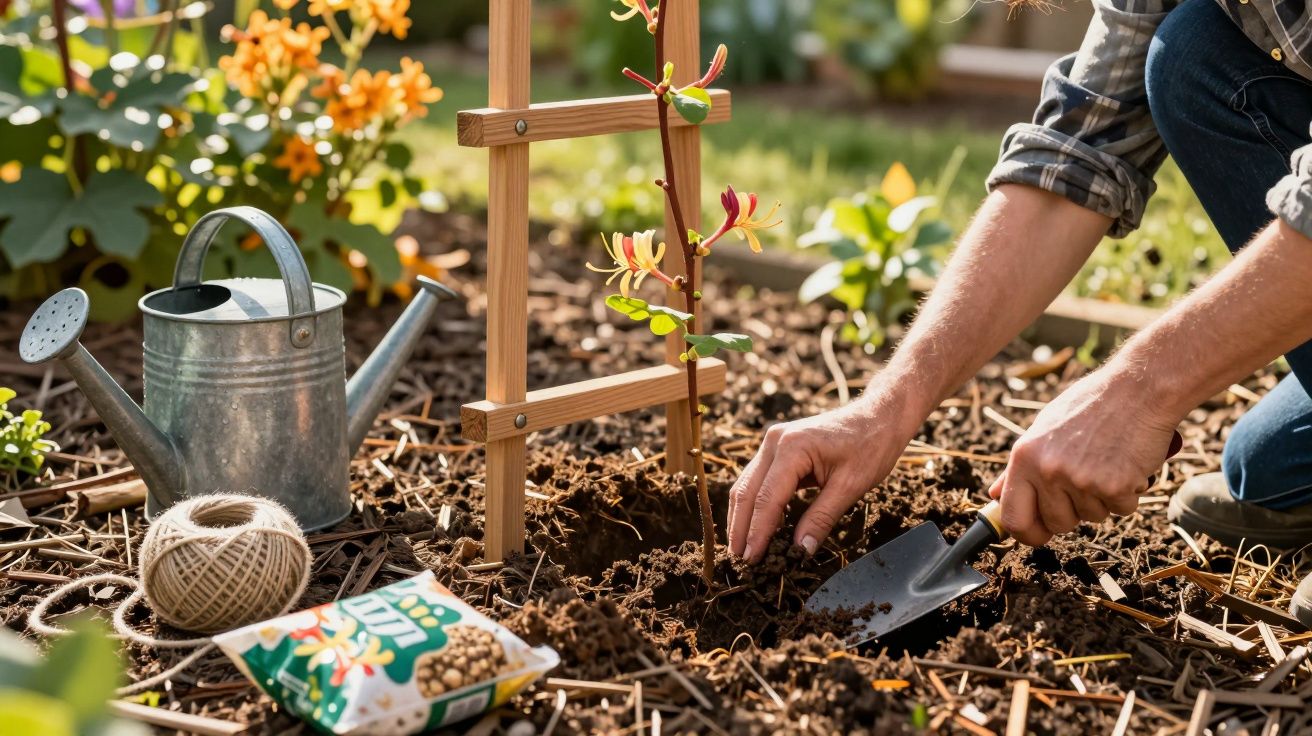
Honeysuckle may look romantic and carefree, but when you plant it-and how you treat it in the first few months-determines how well it performs.
Why gardeners keep turning to honeysuckle
In British and North American gardens, honeysuckle (Lonicera) keeps growing in popularity as people look for fragrance, wildlife value, and fast coverage without heavy upkeep.
- Climbing types can cover bare walls, fences, and pergolas in a couple of seasons.
- Shrubby types make informal hedges and wildlife-friendly corners.
- Many varieties produce nectar-rich, tubular flowers that attract bees, butterflies, and moths.
- Several species produce berries that feed birds after flowering finishes.
Honeysuckle combines three things gardeners rarely get in one plant: fragrance, toughness, and structure.
For small gardens and rental spaces, that combination matters. One plant can screen a balcony, frame a doorway, or turn a dull boundary into a feature-without needing daily attention.
Timing your planting: why the calendar matters
Garden centers sell honeysuckle year-round, but roots respond to temperature, moisture, and soil conditions far more than the tag on the pot.
Planting in fall for stronger roots
In temperate regions, fall has a quiet advantage. From roughly September to November, soil stays warm even as air temperatures drop. Roots keep growing while top growth slows.
Planting honeysuckle in warm, moist fall soil gives it months to anchor itself before spring growth takes off.
That below-ground head start helps the plant:
- Build a deeper, wider root system
- Handle late-spring dry spells better
- Produce more flowering shoots the following year
This approach works across much of the UK, Ireland, and large parts of the northern U.S. In colder inland or northern areas, aim for early fall so roots settle before hard freezes. In milder coastal areas, the window can extend later because the ground rarely freezes deeply.
Spring planting as a workable second choice
Spring-roughly March through May-can still work, but it needs closer attention. Days get longer, winds dry the soil, and young plants lose water quickly through new leaves.
Regular watering during the first season is nonnegotiable. Container-grown honeysuckle can dry out quickly, even in weather that feels mild. Mulch helps retain moisture and stabilizes soil temperature around new roots.
Two conditions make any planting time risky:
- Frozen ground, which prevents root growth and can heave young plants out of the soil
- Extreme heat waves, which stress unestablished roots and scorch tender growth
Light, soil, and support: setting honeysuckle up properly
Honeysuckle tolerates more neglect than many climbers, but it rewards a little planning before you dig.
Getting the exposure right
Most garden varieties prefer sun or partial shade. A common rule of thumb is: head in the sun, feet in the shade. In other words, let the foliage and flowers get light while keeping roots cool and evenly moist.
Shelter from strong, drying winds helps prevent buds from shriveling before they open. In dense urban gardens, reflected heat from walls can even extend the flowering season-especially for evergreen or semi-evergreen types.
Choosing or building the right support
Climbing honeysuckles twine and weave rather than using clinging roots like ivy. They need something to wrap around.
- Wooden trellises and wall wires work well in narrow side yards.
- Pergolas, arches, and arbors can create walk-through tunnels of fragrance.
- Sturdy mesh or fencing works in exposed spots as long as it stays rigid.
Without planned support, honeysuckle tangles into itself, flops onto nearby shrubs, and becomes difficult to prune later.
Shrubby honeysuckles stand on their own but may benefit from staking in windy areas during their first year or two.
Soil structure and drainage
Honeysuckle prefers fertile, well-drained soil with plenty of organic matter. Heavy, compacted clay slows root growth and traps water around the base.
Gardeners often improve a planting site by mixing in:
- Compost or well-rotted manure to boost nutrients and soil life
- Sharp sand or fine grit in sticky soils to improve drainage
- Leaf mold to improve texture and moisture balance
| Soil condition | Risk for honeysuckle | Simple correction |
|---|---|---|
| Waterlogged clay | Root rot, weak growth | Raise planting area; add grit and organic matter |
| Very sandy | Dries out fast; nutrients wash away | Add compost and mulch regularly |
| Thin soil over rubble | Stunted roots; heat stress | Dig a larger hole; remove debris; refill with enriched soil |
Step-by-step: planting honeysuckle for lasting impact
Planting only takes minutes, but a few details shape long-term growth and health.
1. Prepare the planting area
Remove weeds, old turf, and stones from an area larger than the pot. Loosen the soil 12–16 inches (30–40 cm) deep so new roots can move in easily. Mix in compost or a slow-release, balanced organic fertilizer to support early growth without burning roots.
2. Dig the right-size hole
Dig a hole about twice as wide as the root ball and just slightly deeper. Wider holes encourage roots to spread instead of circling. Break up hard clods at the bottom so water drains through rather than pooling.
3. Position the plant carefully
Slide the plant out of its container. If roots are tightly spiraled around the outside, gently loosen a few with your fingers to encourage outward growth. Set the plant so the base of the stems sits level with the surrounding soil.
For climbers, angle the root ball slightly toward the support and place it about 8–12 inches (20–30 cm) away from a wall or fence. That gap lets rain reach the roots and gives them room to spread.
4. Backfill, firm, and water
Refill the hole with the improved soil, working it gently around the roots. Firm lightly with your hands rather than stomping, which compacts soil. Shape a shallow basin around the plant to hold water.
A deep, slow watering right after planting removes air pockets and helps the soil settle snugly around every root.
Finish with an organic mulch-such as bark, composted wood chips, or leaf mold-keeping it a couple inches away from the stems to reduce rot.
Care after planting: from first bud to a full curtain of flowers
Once established, honeysuckle needs surprisingly little. The first year, however, sets the tone.
Watering and feeding
During establishment, check soil moisture regularly. The surface may dry quickly while deeper soil stays damp, so test by pushing a finger down farther. A deep soak once or twice a week is better for new plants than a light daily sprinkle.
In spring, a fertilizer higher in potassium supports flowering. Too much nitrogen-especially from high-nitrogen lawn fertilizers-pushes leafy growth at the expense of fragrance and blooms.
Training and pruning
Young climbing honeysuckle benefits from guidance. Tie new shoots loosely to wires or trellis with soft ties, aiming them into gaps where you want coverage. As stems thicken, they will twine on their own.
After flowering, gardeners typically:
- Remove dead, diseased, or damaged stems
- Thin congested growth to improve airflow and light
- Shorten stray shoots to keep the plant within its space
Older, worn-out plants often respond well to renovation pruning done gradually over two or three years, cutting some of the oldest stems back near the base to stimulate fresh shoots.
Watching for pests and diseases
Aphids, powdery mildew, and (in some regions) honeysuckle leafrollers can affect stressed plants. Regular checks help you catch curled leaves, sticky residue, or grayish fungal coating early-when pruning affected parts and adjusting watering habits can still help.
Common mistakes that hold honeysuckle back
A few recurring issues reduce flowering or shorten the plant’s life, even when the variety suits the region.
- Planting in poorly drained soil, leaving roots in cold, stagnant water
- Skipping support for climbers, resulting in a messy, ground-hugging tangle
- Underwatering in the first year, especially with spring-planted containers
- Letting growth smother other shrubs or block gutters and windows
Most honeysuckle failures come down to the first 12 months: the wrong location, water stress, or no structure to climb.
Choosing the right honeysuckle for your space
Your climate, space, and preferences determine the best choice. Fragrant climbers like common honeysuckle work well near doors and seating. Evergreen or semi-evergreen types provide year-round screening in mild regions. Compact, shrubby types fit better as low hedges along paths and driveways.
Before buying, gardeners check mature size, bloom season, and whether berries may form. In family gardens with young children, some people prefer non-berrying options, since berries from certain species can cause stomach upset if eaten in large amounts.
Beyond planting: using honeysuckle in broader garden design
Honeysuckle works not only as a plant, but as part of a bigger plan. Paired with late-blooming clematis on the same support, it extends color for more months. Combined with night-scented flowers near a patio, it adds atmosphere to summer evenings without relying on artificial fragrance.
Designers also use honeysuckle to create wildlife pathways through gardens, linking hedges, trees, and wildflower areas so birds, bees, and other pollinators can move more easily. That living network supports resilience as weather patterns shift-making one fragrant climber part of a larger ecological picture.





Comments
No comments yet. Be the first to comment!
Leave a Comment