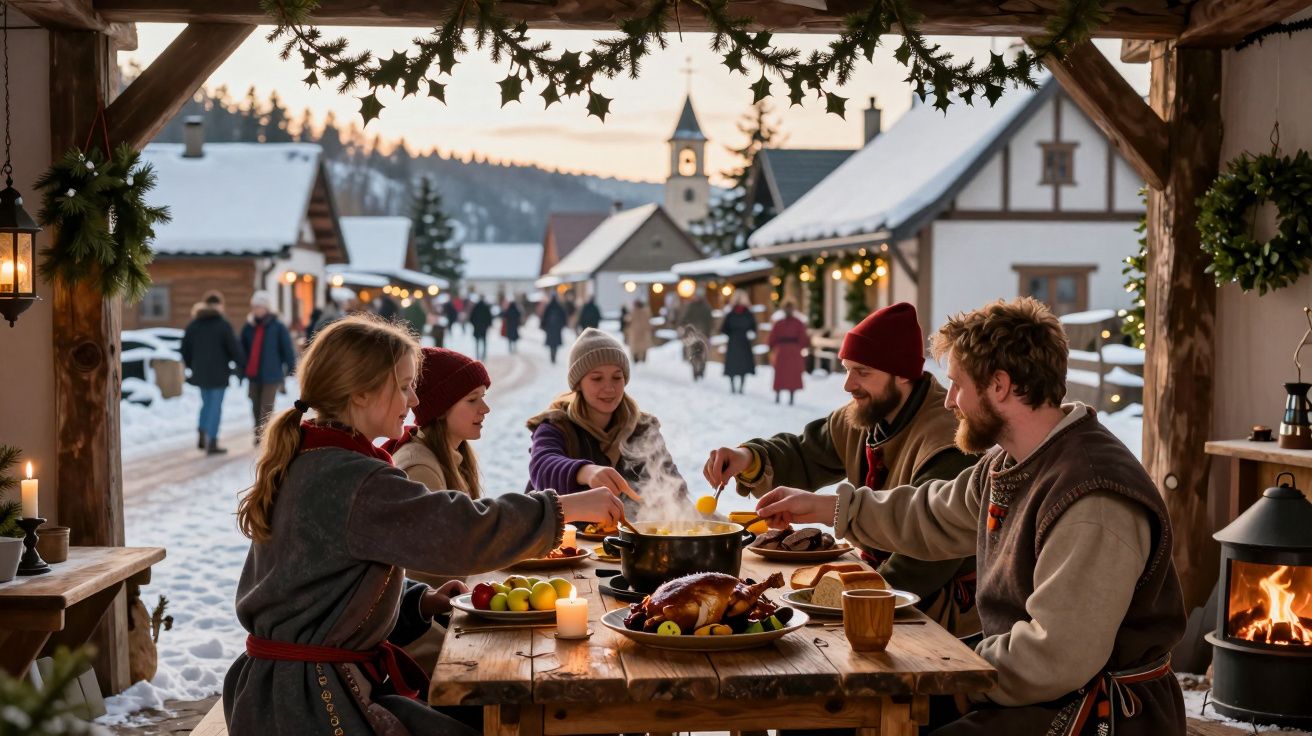
That long stretch between the last harvest and the first plowing created a strange, forgotten rhythm: hard lives, yes, but long holidays.
The surprising free time of “overworked” medieval peasants
Modern images of the Middle Ages lean on misery: mud, hunger, violence. Yet parish records, manorial accounts, and religious calendars sketch something more nuanced. Peasants worked brutally hard in bursts. They also stepped back from heavy labor far more often than most of us with full-time jobs.
In much of Christian Europe, Sundays already removed one day in seven from fieldwork. Add the many saints’ days, local patron feasts, fairs, and major Christian celebrations like Easter and Pentecost, and historians estimate that roughly a third of the year brought lighter duties or complete rest for many villagers.
Peasants could spend around one in three days outside intense labor, giving festivals a scale and depth that surprise modern workers.
That does not mean peasants lounged around. Tasks inside the home, small repairs, animal care, and brewing still filled the schedule. Yet the legal and religious framework forced landowners to loosen their grip on labor regularly. When Christmas arrived, that rhythm stretched into something we might recognize as a true “season,” not a 48-hour sprint between emails.
Village life: cramped houses, busy streets, constant company
Most peasants lived in small villages, from a handful of houses to several hundred. Their homes were modest by today’s standards: around 700 square feet on average in England, often built from timber, turf, stone, or wattle-and-daub, with thatched roofs.
Space was shared and noisy. A single large room could hold parents, children, and sometimes animals. Windows, if any, were tiny and shuttered. Light came from the doorway, the hearth, and the occasional candle or oil lamp. Privacy-especially sexual privacy-barely existed.
People rose with the sun and worked to its timetable. Men usually headed to the open fields to grow wheat, barley, and oats. Women juggled childcare, kitchen gardens, poultry, spinning, mending, and cooking. Recipes measured time by prayer-“boil for three Pater Nosters”-because clocks played no role in rural kitchens.
Meals looked simple yet more varied than stereotypes suggest. A thick soup or stew formed the core, with bread always present. Many peasants ate lamb or beef when available, plus cheese, cabbage, leeks, onions, beans, and turnips. Those with access to rivers and ponds valued freshwater fish. Beer and weak wine appeared constantly, though they contained less alcohol than many modern drinks.
Sleep patterns differed sharply from our eight-hour ideal. Many villagers practiced “segmented sleep”: a first sleep soon after nightfall, a waking phase used for prayer, talk, or sex, then a second sleep until dawn. That in-between period let neighbors gossip across shared beds and thin walls, setting the stage for the dense social life that made festivals so intense.
The long medieval Christmas: more than a single day off
While many Americans mentally switch Christmas on after Thanksgiving and switch it off around January 2, medieval villagers in Western Europe stepped into the season far earlier and left it far later.
From Saint Martin’s fast to Christmas feasts
The season opened with the feast of Saint Martin in November, roughly forty days before Christmas in medieval practice. That date did two things at once: it drew a spiritual line on the calendar, and it responded to food logistics after harvest.
From Saint Martin’s Day, many Christians kept a kind of mini-Lent. They reduced meat and dairy on certain days. Church leaders framed this as a period of restraint and longing before Christ’s birth.
The Advent fast helped believers cultivate spiritual hunger while also stretching autumn’s supplies until salted and smoked meats were safe to store.
This long, semi-ascetic Advent would feel familiar to anyone who cuts back on alcohol or spending before December payday. Yet the contrast with what followed was striking.
Christmas Day opened a nearly six-week stretch of heightened celebration. The familiar “12 days of Christmas” ran from December 25 through Epiphany on January 6, marking the visit of the Magi. In many places, gift-giving clustered around New Year rather than the 25th, and offerings often took the form of food, drink, or coins rather than wrapped objects.
Menus built for cold weather and shared tables
The rich, of course, put on grander feasts. But even peasant tables looked more generous over Christmas than at most points of the year. Surviving accounts and recipe collections highlight:
- game birds such as geese and partridges
- salted or smoked ham
- meat pies using pork, beef, or venison
- spiced wines and ales, often warmed
Spices such as cinnamon, cloves, and ginger cost money, so they signaled special occasions. Medical theory of the time also treated them as substances that could “warm” the body and balance humors in the bleak midwinter.
Warming spices, bright fires, and overflowing benches pushed back against long nights, doing social work as much as culinary work.
Pagan echoes: light, greenery, and midwinter anxiety
Christmas was officially about Christ’s birth, yet many customs blended Christian preaching with older seasonal rituals. The winter solstice loomed large in agricultural societies that feared running out of stores before spring.
Bonfires, yule logs, and evergreen decorations symbolized life persisting under snow. Some communities blessed greenery and hung it in houses and churches. Storytellers wove tales of demons, goblins, and mischievous spirits angered by neglected rituals, using fear to nudge people toward participation.
The manger scene that appears on many modern mantels has a specific history as well. Tradition credits Francis of Assisi with staging the first live nativity in 1223 to make the theology of the Incarnation more concrete for village audiences. That choice turned a doctrine into a physical spectacle, reinforcing the sense that Christmas belonged to ordinary people as well as to clergy.
The slow fade of the season: from Epiphany to Candlemas
In medieval England, Christmas did not end abruptly on January 6. The first Monday after Epiphany marked “Plow Monday,” when agricultural labor officially resumed. Villagers sometimes paraded a plow through the streets, collected money for parish needs, and then headed back to the fields.
Yet the cultural “off switch” came even later. Candlemas on February 2 closed the wider winter season. Priests blessed candles for the year ahead, linking fire and light back to spiritual protection. In parts of the Celtic world, Candlemas overlapped with Imbolc, another late-winter festival. Fragments of that older layer lingered in warnings: any Christmas greenery left hanging after Candlemas risked attracting goblins.
| Key date | Rough period | Seasonal meaning |
|---|---|---|
| Saint Martin’s Day | Mid-November | Start of Advent fast and rationing |
| Christmas Day | December 25 | Main feast, church services, start of intense celebrations |
| Epiphany | January 6 | End of the “12 days,” gifts and processions |
| Plow Monday | First Monday after Epiphany | Return to organized agricultural work |
| Candlemas | February 2 | Blessing of candles, final end of Christmas-tide |
Why medieval Christmas might feel better than ours
Modern workers in the United States and United Kingdom usually get Christmas Day itself and perhaps a handful of surrounding days. The to-do list-shopping, travel, childcare, cleaning, cooking-gets squeezed into a narrow window. Many people carry laptops and deadlines through the whole period. Social pressure to stage a “perfect” holiday piles on top.
For medieval peasants, Christmas did not center on perfection. It revolved around rhythm. Fasting widened into feasting. Work loosened into games, dancing, and churchgoing. People expected the season to stretch, so no single day had to carry the burden of every tradition.
Communal bonds also shaped the experience. A villager could walk out the door and meet neighbors at the bread oven, the tavern, or the church porch. You didn’t compare your decorations to strangers online. You compared them to the greenery in the house next door.
The season worked because the whole village slowed down together; nobody tried to cram winter rituals around an unbroken stream of office emails.
What a “medieval-style” holiday might look like now
Most of us cannot take six weeks away from paid work. Yet the medieval pattern hints at small, practical changes that could ease seasonal pressure.
- Start earlier with gentle habits, like a quieter social calendar or simple, repeating meals in late November.
- Stretch celebrations beyond a single date: plan two or three low-key gatherings through January instead of one huge party.
- Anchor the season with shared rituals-lighting candles at the same hour, walking the same route, cooking one traditional dish together.
- Accept that not every corner of the house or life needs to look festive at once.
There is also a lesson in how peasants linked faith, food storage, and community planning. The Advent restrictions doubled as an early form of resource management. Families resisted the urge to eat all the fresh meat at once, because they knew deep winter lay ahead. For modern households wrestling with heating bills and food costs, a planned, modest early winter can make later treats feel more secure rather than more stressful.
Another angle comes from segmented sleep. Research into historical sleep patterns suggests that the waking period at night once felt normal. For people whose anxiety spikes during winter nights, reframing those wakeful hours as time for reading, journaling, or quiet prayer instead of doomscrolling can nudge the brain away from panic. Medieval villagers might have used that twilight slot to whisper gossip; twenty-first-century workers could claim it for something calmer than email.
The medieval Christmas season sat on top of hard lives, limited medicine, and real hunger. Fully romanticizing it makes little sense. Yet the calendar they followed-fast, feast, rest, return-offered a structure that our nonstop work schedules rarely match. A small dose of that older rhythm could change how modern holidays feel, even if the goblins now live more in our inboxes than in the rafters.






Comments
No comments yet. Be the first to comment!
Leave a Comment