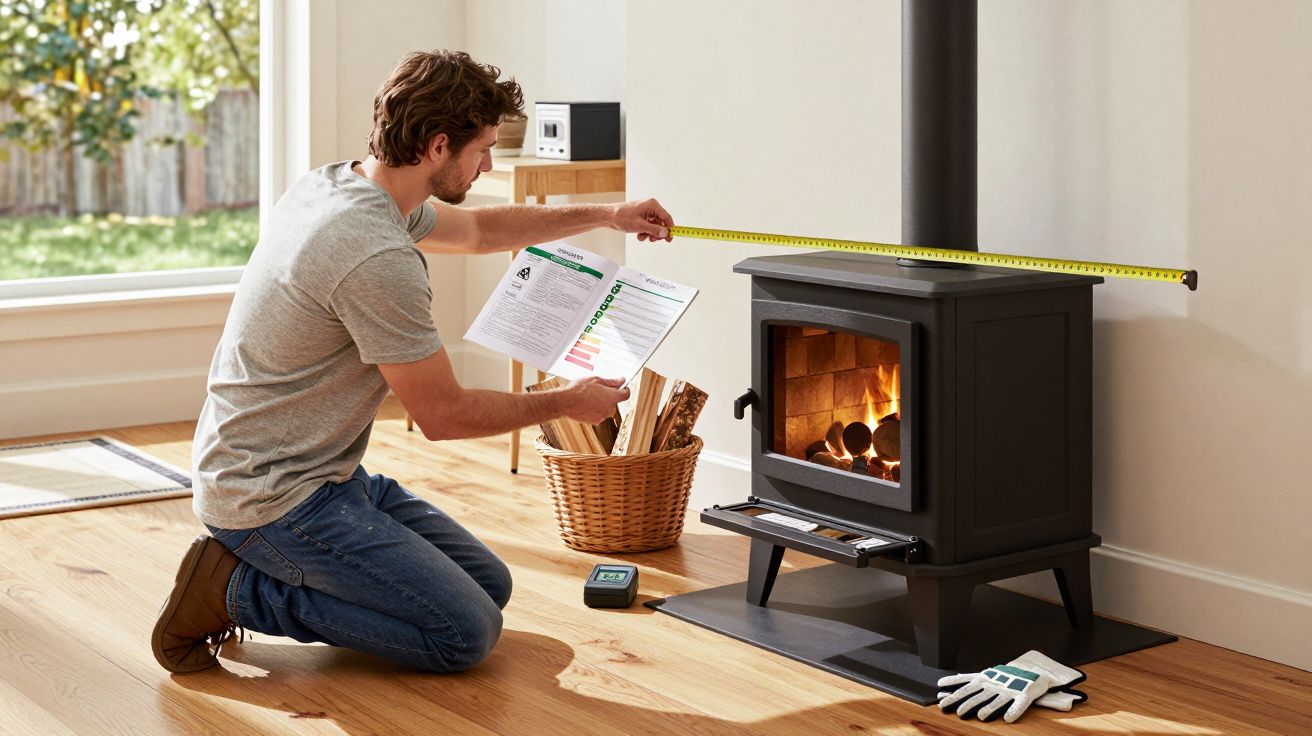
The first snowflakes were tapping the window when Mark realized his living room was warm… and strangely disappointing.
The brand-new wood stove he’d dreamed about for years was roaring, the glass door glowing orange, but half the heat seemed to be racing straight up the chimney. The installer had left an hour ago, the invoice was still on the table, and doubts were already creeping in. Wrong size? Wrong model? Wrong everything?
He grabbed his phone, typed “best wood stove,” and fell into the same rabbit hole as everyone else: glossy photos, technical jargon, and thousands of conflicting reviews. Some swore by tiny stoves with huge flames; others by massive cast-iron beasts that take half the day to get going. Somewhere between marketing promises and angry comments, a cold truth surfaced on his screen.
Choosing a wood stove is less about style than about five stubborn facts.
The First Battle: Size, Space, and Real Needs
Most people start with the stove’s look: the big window, the sleek black steel, that Scandinavian vibe. But the first question should be brutally simple: how big is the space you actually want to heat, and how is your home laid out? A 3 kW stove in a stone farmhouse won’t do the same job as an 8 kW model in a well-insulated city home. Heat is math dressed up as romance.
Walk through your home and look at it the way a lazy flame would. Open concept? Closed-off rooms and narrow hallways? High ceilings that trap warm air above your head? A stove can only work with what you give it. If the heat can’t move, your living room will feel like a sauna while the kitchen stays icy. That’s usually when people start turning it down-wasting both money and comfort.
The industry loves to talk in kW, but those numbers are often marketing averages, not your reality. A rough rule: too small, and the stove will run flat-out all winter and still underperform. Too powerful, and you’ll end up smoldering tiny loads all day, clogging the glass and the chimney, while your face melts from 6 feet away. Oversizing is one of the most common mistakes-because nobody likes the idea of “not enough”-yet a slightly smaller stove that’s run properly often heats better, burns cleaner, and feels more even.
Performance, Efficiency, and the Wood You’ll Actually Burn
The second thing to keep in mind is how your stove behaves once it’s lit-not in a showroom, not in a lab, but in your daily routine. Modern stoves can reach 75–85% efficiency, meaning most of the energy in your wood becomes heat in your room, not smoke in the sky. That number depends on the design, airflow, door sealing, and also something far less glamorous: how dry your wood is.
On a cold Tuesday night, when you get home tired and just want warmth fast, you won’t be measuring moisture with a gadget and stacking logs like an engineer. You’ll grab what’s near the door and hope for the best. That’s why you need a stove that can handle real life. Some models cope better with slightly damp wood, using smart secondary-air systems that keep the flames active and the glass cleaner. Others sulk and soot up the moment conditions aren’t perfect.
Let’s be honest: nobody truly does everything by the book every day. Nobody weighs every log or follows the manual line by line. The right stove is the one that works well when you use it “almost correctly.” Look for clean-burn or eco-labeled models that burn gases and particles more completely. They produce more heat with less wood and far less smoke smell around the house.
The wood you buy will vary in quality and dryness. Your loading habits will vary. You’ll sometimes overload or underload the firebox. A forgiving, efficient stove smooths those human imperfections into steady comfort.
Installation, Safety, and the Daily Choreography
The third thing to keep in mind is invisible when you’re scrolling through beautiful photos: how this stove will live in your home every single day. Where will the flue run-through the roof, along a wall, into an existing chimney? Is there enough combustion air in the room, or will the stove fight your kitchen range hood for oxygen? Small details like clearance to furniture, curtains, and wooden beams matter a lot once the fire is really roaring.
On a rainy afternoon, try this simple exercise: imagine coming in with muddy shoes, an armful of logs, and a dripping jacket. Where do you walk? Where do you drop the wood? Where will ash and splinters land? Homeowners often realize too late that the stove is awkwardly placed-either jammed into a corner or too central, turning the best walkway into an obstacle course. On a busy evening, that’s the kind of thing that makes you quietly resent a purchase you once loved.
Professional installation isn’t just a line item on the quote-it’s the foundation of everything that follows. A correctly sized flue, proper clearances, suitable floor protection, and compliance with local codes greatly reduce the risk of smoke backdrafts, stained walls, or worse, fire hazards. A good installer will also think about clean-out access, chimney sweeping, and how the stove “breathes” with the rest of the house. The right layout turns your wood stove from an Instagram object into a dependable part of daily life.
Living With the Stove: Habits, Budget, and Comfort
The fourth thing to keep in mind has nothing to do with steel or cast iron-and everything to do with your habits. Do you picture yourself lighting a small fire most evenings, or firing it hard on weekend mornings? Are you gone all day, or working in the living room next to the stove? A model with long burn times is ideal if you like low, steady heat. A more responsive stove fits people who want fast warmth, then let it burn down.
Think about the budget beyond the price tag. The cost of flue pipe, installation, wall protection, and wood storage can easily match-or exceed-the stove itself. Some stoves are cheap to buy but burn wood aggressively, and that adds up every winter. Others cost more up front but sip fuel slowly. If you live where firewood prices are rising, efficiency becomes a monthly budget line-not just a green sticker in a catalog.
“A wood stove isn’t a piece of furniture you swap on a whim. You’re designing three hundred evenings a year for at least a decade.”
- Think in seasons, not days: will this stove still fit your life when the kids grow up, when you work from home more, when energy bills change?
- Be honest about your tolerance for chores: if refilling every hour drives you crazy, choose a model and size that extends burn time.
- Don’t ignore small comforts: a nearby log rack, a real ash bucket, and a glove hanging on the wall all change how you feel about striking that first match.
The Five Mental Checkpoints Before You Buy
The fifth thing to keep in mind is a simple checklist you can run in the store or online right before you click “order.”
First: does the power rating in kW match your space and insulation, or are you being pulled into “bigger is better”?
Second: can you clearly picture where the stove will sit and how the flue will run-without awkward bends or trapping heat in the wrong place?
Third: do the efficiency rating, clean-burn technology, and certification meet local requirements and your own comfort level about smoke and pollution?
Fourth: how easy is it to operate for the least motivated person in the house? One control dial too many, and half the time it’ll run on the wrong setting, with dull, dirty flames.
Fifth: does the total cost-including flue, accessories, and wood for the first season-fit comfortably within what you actually want to spend?
At a gut level, a good stove choice feels calm. You’re not hypnotized by the glass door alone. You’ve walked through those five points and nothing feels vague or like “we’ll deal with it later.” On a cold night, when the logs crackle and the room gets a little dimmer, that quiet confidence turns a simple fire into something bigger than heat. It becomes a small ritual that anchors winters, stories, and long conversations.
| Key Point | Details | Why It Matters |
|---|---|---|
| Size the heat output correctly | Match kW to the real square footage, volume, and insulation | Avoid a stove that underheats-or overheats and smothers the room |
| Plan the installation | Flue route, combustion-air supply, safety clearances | Better safety, draft performance, and daily comfort |
| Anticipate real-world use | How often you’ll light it, wood budget, family routines | Choose a stove that fits real life, not a brochure |
FAQ
How many kW do I actually need for my wood stove?
As a rough guide, many installers use about 1 kW per 100 sq ft in a reasonably insulated home with standard ceiling height, then adjust for insulation quality and layout. A professional heat-loss calculation is worth it if your house is unusual.Is cast iron better than steel for a wood stove?
Cast iron stores heat longer and releases it slowly, while steel heats up faster and cools down faster. The best choice depends on whether you prefer quick response or long, gentle warmth. Build quality matters more than the material alone.Can a wood stove heat an entire house?
In a compact, open-concept, well-insulated home, one centrally placed stove can cover most heating needs. In homes with many closed rooms or multiple floors, it usually becomes the main heat source for the living area and a supplement elsewhere.What kind of wood should I burn for best results?
Well-seasoned hardwood (like oak, beech, or ash) with moisture content below 20% gives the best heat and cleanest burn. Softwoods ignite quickly and are great for starting fires, but they burn faster and may leave more deposits if used alone.How often do I need to sweep the chimney?
Most guidelines recommend at least once a year for regular use, and some insurance policies require proof. If you burn a lot of wood or often use slightly damp logs, twice a year is safer. Checking soot and deposits during the season is a smart habit.





Comments
No comments yet. Be the first to comment!
Leave a Comment