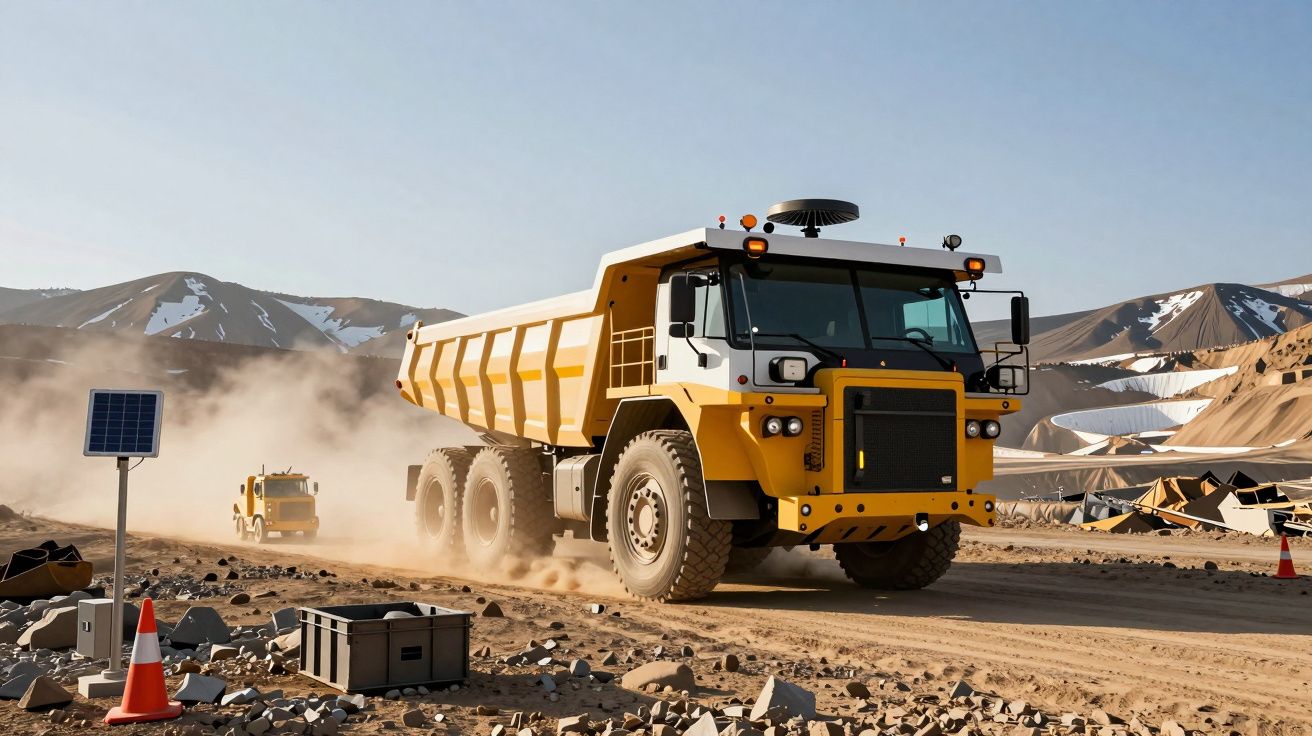
Far from any city, high in the Kunlun Mountains, a Chinese mining project is quietly redefining how far automation can go when human bodies simply can’t keep up.
Where humans struggle, machines keep moving
Huoshaoyun doesn’t look like a logical place for an industrial operation. The site sits about 5,600 meters (18,400 feet) up-higher than La Rinconada in Peru, often called the highest city on Earth. Oxygen levels drop sharply at that altitude. Walking a few meters can feel like sprinting at sea level.
Temperatures can fall to -20°C (about -4°F) or lower. Wind gusts cut through protective gear. The ground stays frozen for much of the year, complicating any construction project. Short shifts, medical monitoring, and slow logistics would cripple a conventional mine.
Yet beneath this frozen rock lies a jackpot. Geological surveys estimate more than 21 million metric tons of lead and zinc in the Huoshaoyun deposit. At late-2025 prices, analysts value the resource at roughly €45 billion.
Huoshaoyun holds one of the world’s largest undeveloped lead-zinc deposits, but its altitude makes normal mining almost impossible.
China’s answer: remove the human body from the harshest part of the work and keep the brains behind screens at a lower altitude.
A driverless truck fleet designed for thin air
More than trucks: rolling robots with nerves of steel
The vehicles at the site barely resemble traditional mining trucks. They haul massive loads, but the real story is the electronics. Each unit carries radar, lidar, high-resolution cameras, and onboard computing systems that fuse data in real time.
The trucks follow pre-mapped routes, but they don’t just stick to a scripted path. They detect rocks in the road, other vehicles, and unexpected terrain changes, then recalculate safe trajectories on the fly.
A 5G network blankets the mine, acting as the nervous system for the entire operation. Trucks share their position, speed, and sensor data with one another and with a central control room. Algorithms coordinate convoys, schedule passing points, and enforce safe following distances.
Every truck becomes a moving sensor platform, feeding a constant stream of data into a real-time digital twin of the mine.
Far away, teams of operators sit in warm control centers facing panoramic screens. They get a 360-degree view from each vehicle, layered with data overlays. Under normal conditions, the trucks drive themselves. If something unusual appears, a human can take remote control for a few minutes, then hand it back to autonomy.
Why altitude makes autonomy more attractive
- Human performance drops quickly with low oxygen, increasing fatigue and mistakes.
- Labor rotations, medical support, and hazard pay sharply raise operating costs.
- Extreme cold increases the risk of frostbite and equipment failures.
- Rescues after accidents become slower and more dangerous.
By keeping drivers off the mountain, the operator avoids most of these problems. Altitude-related sick leave disappears. Rotations move from truck cabs to control rooms. A smaller, highly trained technical team can manage many vehicles at once.
Around-the-clock mining, no coffee breaks
A closed loop that never gets tired
The Huoshaoyun site now runs a mostly continuous haulage loop. Excavators load ore into trucks. The vehicles drive along predefined routes to dumping points or processing facilities, unload, and return for another load.
Unlike human crews, these machines don’t need food, sleep, or oxygen masks. Engineers can schedule maintenance during low-price periods or narrow weather windows rather than around shift changes. When a snowstorm hits, the system slows or pauses, but it doesn’t depend on human endurance to restart.
Trials reported by Chinese media point to a major boost in logistics efficiency. Speed stays steady, braking distances remain predictable, and routing decisions follow data rather than habit. Human drivers can be excellent, but very few can maintain perfect focus for long hours at altitude.
The real gain isn’t just speed-it’s consistency. Every load, every trip, every stop gets measured, analyzed, and optimized.
Engineers are already working on the next step: autonomous excavators and drilling rigs, aiming for a fully automated mining chain from blasting to primary crushing. Humans supervise, repair, and plan-but don’t stand at the rock face.
Why this mine matters far beyond Xinjiang
A strategic metals play hiding behind the tech story
Lead and zinc rarely dominate headlines, yet they sit at the core of modern industry. In December 2025, zinc traded around €2,500 per metric ton, while lead hovered near €1,970 per metric ton. Those aren’t record highs, but they support a market with deep industrial roots.
Lead still underpins large batteries for backup power, telecom systems, and heavy industry. Zinc primarily protects steel through galvanizing and is used in countless alloys. Demand doesn’t vanish overnight, even when the global economy slows.
| Metal | Main uses | Price (Dec 2025, approx.) |
|---|---|---|
| Lead | Industrial batteries, construction, shielding | €1,970 / metric ton |
| Zinc | Galvanized steel, alloys, construction | €2,500 / metric ton |
Analysts expect downward pressure on zinc prices from rising supply and demand that grows more slowly than previously forecast. That makes low-cost, efficient operations especially attractive. An automated mine that requires fewer on-site workers can survive thinner margins while staying profitable longer.
Mining in contested and remote regions
Huoshaoyun lies in Aksai Chin, a remote and disputed region between China and India. The mine belongs to Guanghui Energy and ranks among the largest lead-zinc operations in the world. Its location sends a political message as much as a technological one: Beijing can extract value from high-altitude border regions where logistics challenge any neighbor.
Automation helps here, too. Fewer workers means fewer housing units, less fuel, less food to ship, and a smaller support footprint. That simplifies security planning in sensitive border areas and can reduce how visibly the project shows up in satellite imagery compared with a busy conventional mining town.
From mountains to seabeds, and maybe the Moon
A template for future hostile-environment projects
The same toolkit used at Huoshaoyun could migrate to places that are even less welcoming than a frozen mountain: Arctic mines, offshore platforms, deep underground operations, or future seabed mining sites.
Autonomous vehicles paired with high-bandwidth links and remote operations centers create a clear pattern: keep humans where they can work safely, and send machines into the truly brutal environments. The frontier shifts from physical toughness to engineering reliability and cybersecurity.
Where geology offers value but nature pushes humans to the edge, remote and autonomous systems turn impossible sites into manageable projects.
Space agencies and private companies are exploring similar ideas for lunar or Martian resource extraction. Rover-like machines could dig regolith, haul it to processing stations, and build infrastructure ahead of any long-term human presence. Projects like Huoshaoyun serve as real-world testbeds for that kind of thinking.
Risks, trade-offs, and what could come next
Jobs, safety, and the new skills race
Mining autonomy often raises fears of job losses. The reality is more complicated at 5,600 meters. Few workers want permanent roles at that altitude, even with high pay. Shifting the most dangerous tasks to machines reduces accidents and health problems, but it also moves employment toward highly technical city-based roles.
Regions adopting these systems will need more software engineers, remote operators, maintenance specialists, and data analysts. Traditional driving and manual mining skills matter less. In many countries, training programs are lagging behind the pace of technology, which could widen the gap between regions that invest early and those that don’t.
Reliance on connectivity and foreign reactions
A fully connected mine also brings new vulnerabilities. If 5G links fail for extended periods, autonomous trucks need safe fallback modes, such as slowing to a stop in secure zones. Cyberattacks, GPS spoofing, and sensor failures represent another class of threats the mining sector must treat as seriously as rockfalls.
Other resource-rich countries are watching China’s move closely. Russia, Canada, Australia, and Chile all operate mines in harsh climates, and some already test driverless haul trucks from global suppliers. Huoshaoyun’s scale and conditions raise the bar and shape expectations for what a “normal” high-altitude or Arctic project might look like a decade from now.
For investors and policymakers, the story goes beyond one Chinese mountain. It raises a direct question: when resources lie under ice, at extreme elevations, or in politically tense zones, will the next generation of mines be staffed by people in hard hats-or by algorithms steering convoys no one ever sees in person?






Comments
No comments yet. Be the first to comment!
Leave a Comment